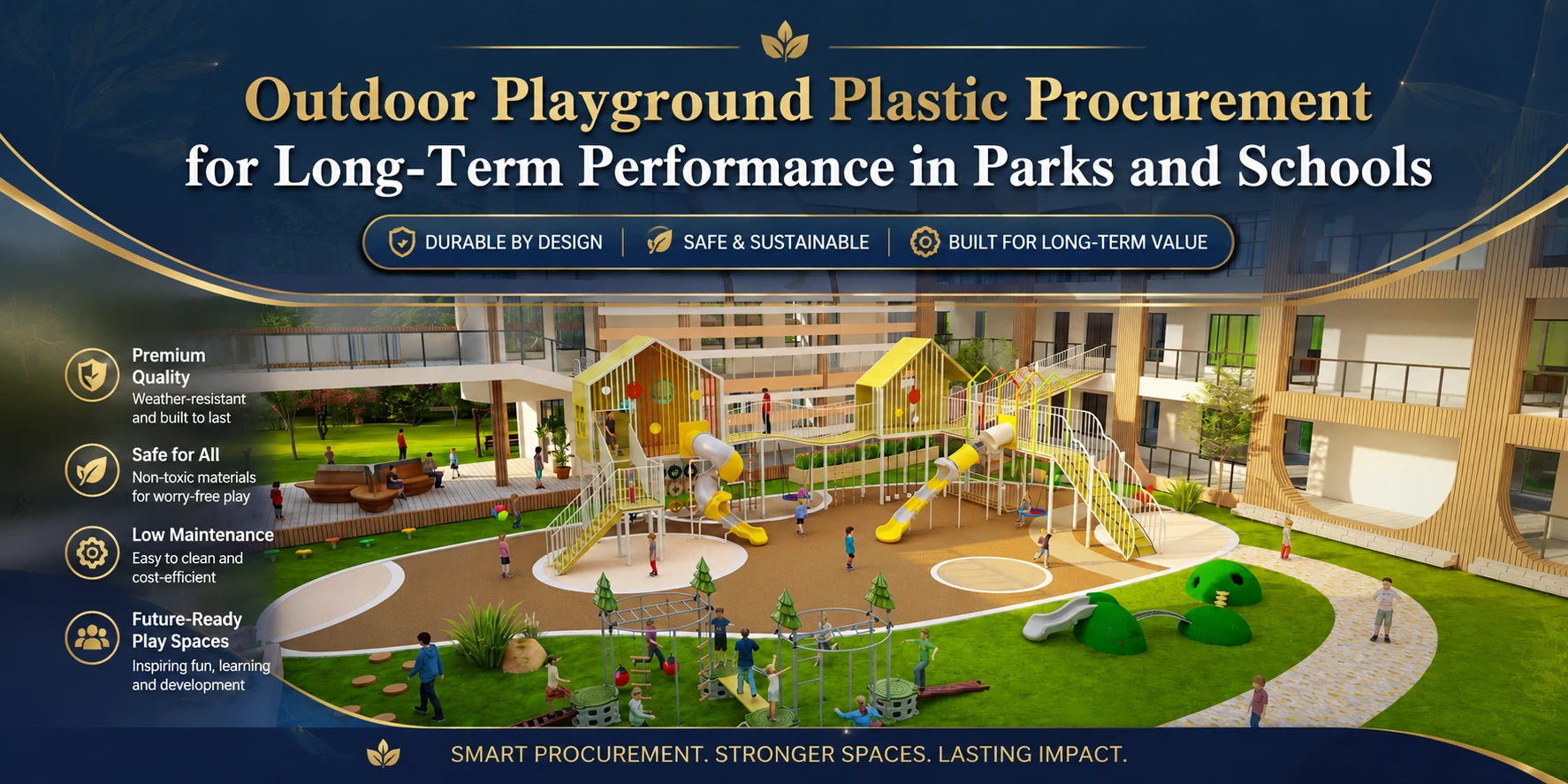
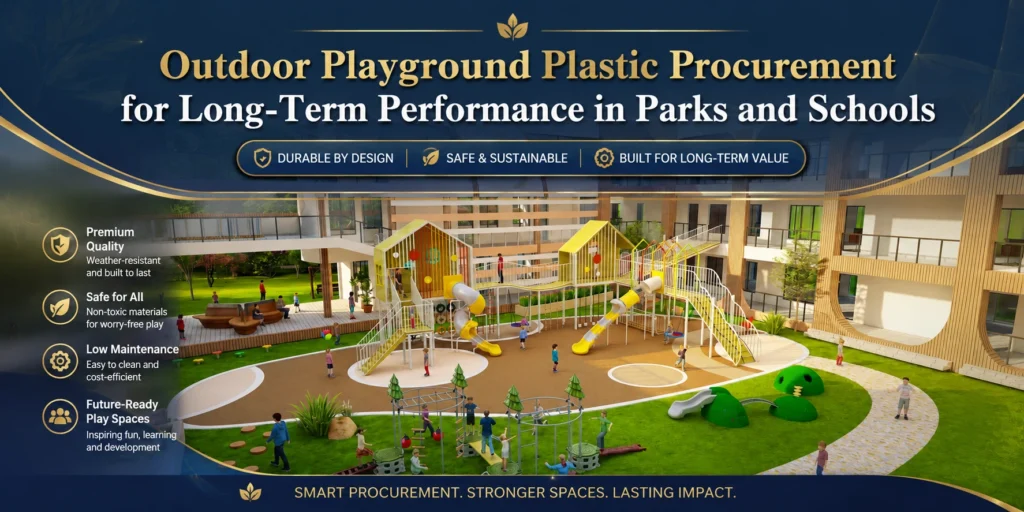
Your procurement team has a public park or school project on the desk. The plastic playground equipment you shortlist must survive years of weather, heavy use, and safety inspections. Suppliers must confirm load ratings, materials, and replacement parts before you commit.
Outdoor playground plastic covers plastic playsets, slides, playhouses, and modular playground components made from polyethylene, resin, or recycled plastic. Schools and parks choose it for moisture resistance, colour retention, and lower maintenance than wood or metal.
This guide maps the product categories and supplier types visible in current search results, so you can compare best playground suppliers with confidence.
The Outdoor Plastic Playground Landscape: Residential Sets, Commercial Structures, and Independent Components
Outdoor plastic playground equipment splits into three buying categories. Residential backyard playsets fit private gardens; commercial-grade structures for parks and schools carry higher load ratings and stricter compliance expectations; standalone components — slides, swings, playhouses — let you extend or replace parts on existing layouts.
For B2B procurement, the distinction shapes your supplier shortlist. A school project needs equipment tested to EN 1176, with documented fall-height data and anchor points, while a residential set rarely meets those specifications. Project scale changes the terms too: bulk orders across multiple sites demand consistent stock, delivery scheduling, and replacement-part availability.
Typical equipment types with use cases:
– Slides and climbing frames — nursery and early-primary settings.
– Belt and cradle swings — public parks and school yards.
– Playhouses and activity centres — early-years play areas.
– Modular multi-play towers — community spaces needing high capacity.
Material and Construction Signals for Commercial-Grade Plastic Equipment
Commercial-grade outdoor playground plastic is almost always high-density polyethylene (HDPE), rotomoulded into seamless shells, or a recycled resin blend. HDPE resists impact, moisture and most cleaning chemicals, which is why it dominates modular play systems. Recycled blends can match that performance, but request the virgin-to-recycled ratio in writing before you shortlist any supplier.
Evaluate equipment against these signals:
- Wall thickness of 8-12 mm on load-bearing panels — thinner parts flex and crack under repeated impact.
- UV stabilisers added at the moulding stage — they prevent fading and surface chalking over 8-10 years.
- Through-colour (not painted) surfaces — colour stays consistent even after scratches.
Most commercial HDPE equipment lasts 8-15 years with routine washing and fastener checks. Painted or non-stabilised plastic needs replacement sooner. Add these specifications to your RFQ so suppliers quote comparable products.
Key Selection Criteria: Age Groups, Installation Complexity, and Safety Surfacing
Use these four criteria to narrow your outdoor playground plastic supplier shortlist before requesting quotes.
-
Target age range and play value. A nursery project needs low decks and enclosed play panels; a school for older children needs higher slides and climbing challenges. Suppliers focused on one age band will quote more appropriate equipment.
-
Installation type. Freestanding plastic playsets suit temporary sites, while anchored structures meet wind-load and stability requirements. This distinction shortlists suppliers who support your site type.
-
Fall height and safety surfacing. Fall height drives the surface choice. Rubber wet-pour costs more initially than loose-fill but needs less maintenance; plastic tiles sit between the two. Confirm the surface depth for loose-fill against the critical fall height.
-
Site preparation. Slopes, drainage, and ground hardness determine whether you need groundworks before delivery.
Filtering on these points turns a broad catalogue into a manageable outdoor playground supplier comparison.
How to Scan Supplier Catalogs for Outdoor Plastic Playground Equipment
Most supplier sites group products by category filters — playsets, swing sets, playhouses — then refine by brand, price band, and size or age range. Learn that structure first; it tells you what the supplier prioritises.
Then run a five-step scan:
- Define project scale. Note user numbers, site footprint, and budget ceiling before opening any catalogue.
- Filter by commercial or residential grade. Commercial-rated units carry higher load limits and stricter weld or fastener specs.
- Compare material specifications. Look for wall thickness, UV stabilisers, and recycled resin content.
- Check age and fall height data. These figures dictate safety surfacing depth, so verify them before shortlisting.
- Confirm replacement part availability. Slides, swing seats, and connectors fail first; ask about spares lead times.
A catalogue scan done this way produces a shortlist of outdoor playground plastic suppliers you can compare on paper before site visits or RFQs.
About JQ Playground – bestplaygroundsuppliers.com
JQ Playground (Wenzhou Jiqi Amusement Equipment Co., Ltd.) is a children’s playground equipment manufacturer founded in 1993. The company provides design, customization, large-scale manufacturing, sales, installation guidance, and after-sales support for outdoor playgrounds, indoor playgrounds, soft play, water playgrounds, PE board playgrounds, kindergarten furniture, outdoor fitness equipment, pet playgrounds, and playground facilities. Approved company facts include 180+ employees, a large Wenzhou production base, 20+ production lines, 55 production machines, ISO/BSCI/EN1176/EN71/ASTM/CPC/CPSIC certification references, 100+ patents, free design support, OEM/ODM capability, trial installation before shipping, export experience, and one-year quality warranty.